
The Traveling Man
To many anglers, the spring walleye run is “the most wonderful time of the year.” The run can kick off the moment the ice clears; in fact, some ambitious fish even begin their trek while the river is still capped.
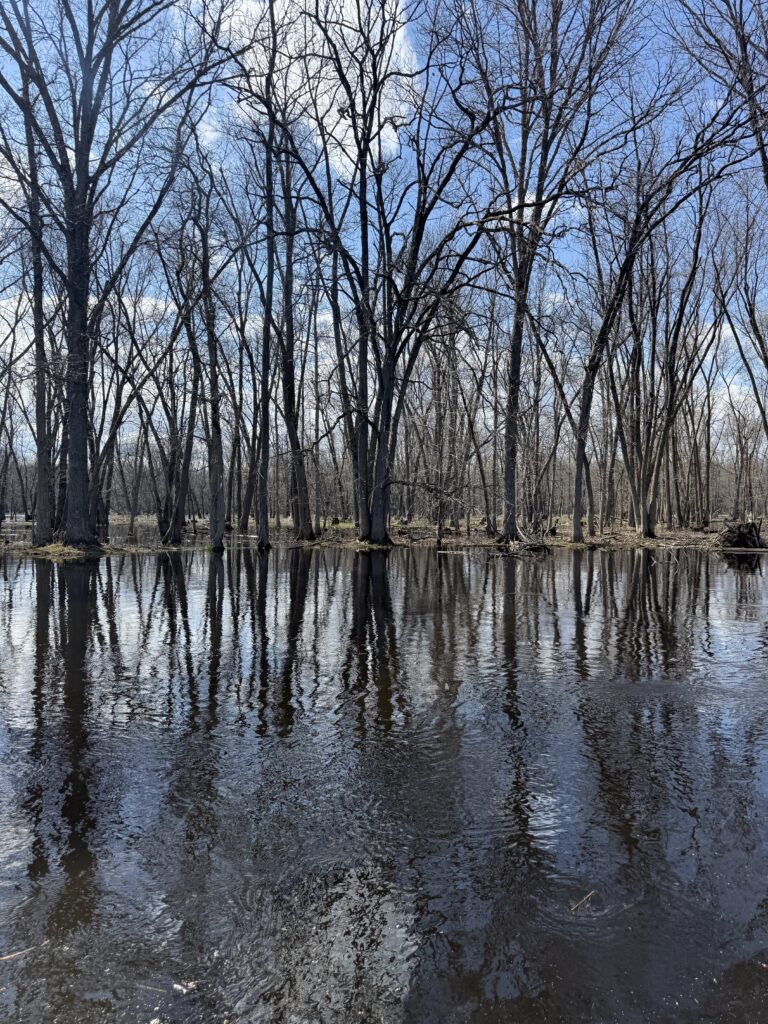
Timing the peak of the spawn is an art form influenced by a dozen variables, but the old-timers know the signs. They say the run hits full swing “when the frogs call out loudly at night.” This usually happens once water temperatures hit the low 40s and stay on the rise. When the marshes flood and the night air remains above freezing, it aligns perfectly with the walleyes’ internal clock. If you see the buds on the trees starting to pop, consider it a clear signal: you belong on the river.
Water Levels and Behavior
The depth of the river and the state of the marshes dictate exactly how far these fish will travel.
High Water Years: When the marshes are flooded, a couple of sunny days can warm the shallows quickly, spurring a frenzy of activity.
Low Water Years: The fish tend to travel further upstream, seeking out deeper holes and channel bends to deposit their eggs.
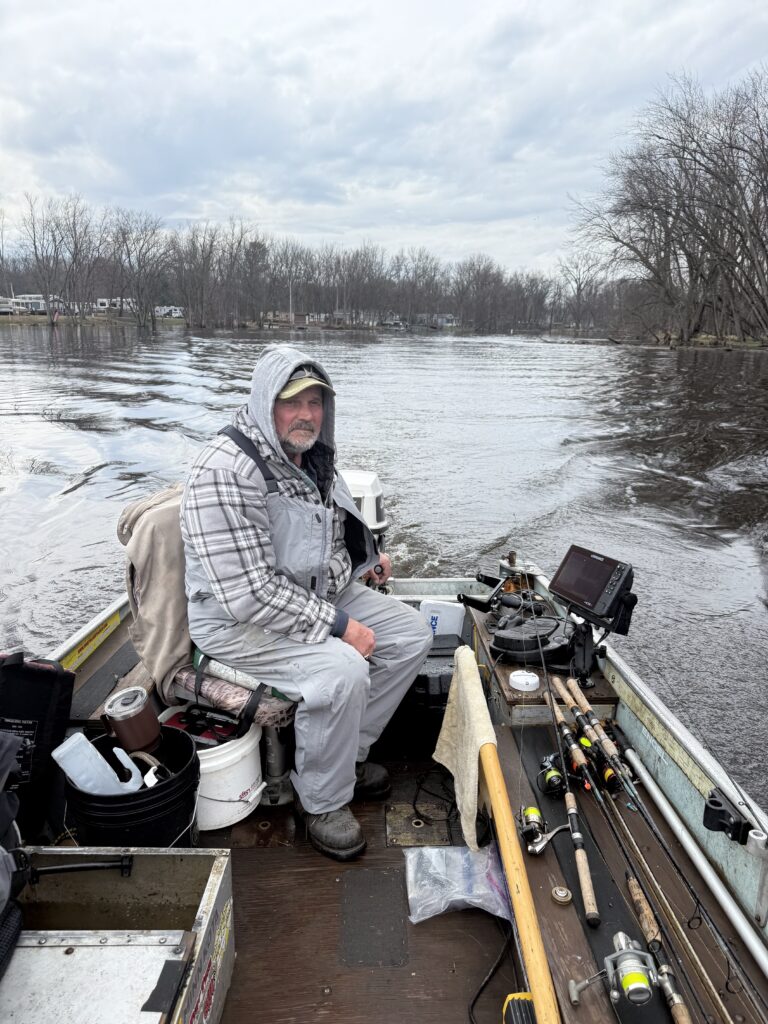
During the peak, the riverbank transforms. You’ll see it lined with rafts glowing under the hum of lanterns and the silhouette of cane poles. Out in the channel, boats drift in a steady rhythm, vertical jigging just inches off the bottom.
Interestingly, the heavy females usually lead the charge upriver, followed closely by the males (or “milkers”). Once the job is done, the fish, now tired and hungry, ride the currents back down toward the lake. This is when a more aggressive approach, like fan jigging, can be lethal. During this transition, the color and size of your jig aren’t just details; they are the difference between a heavy livewell and a long boat ride home.
They say 10% of fishermen catch 90% of the fish. There’s a reason for that, it’s about watching the water, shivering through the cold, and knowing the signs. But at the end of the day, we’re all just happy to be back on the river.
About the Author